
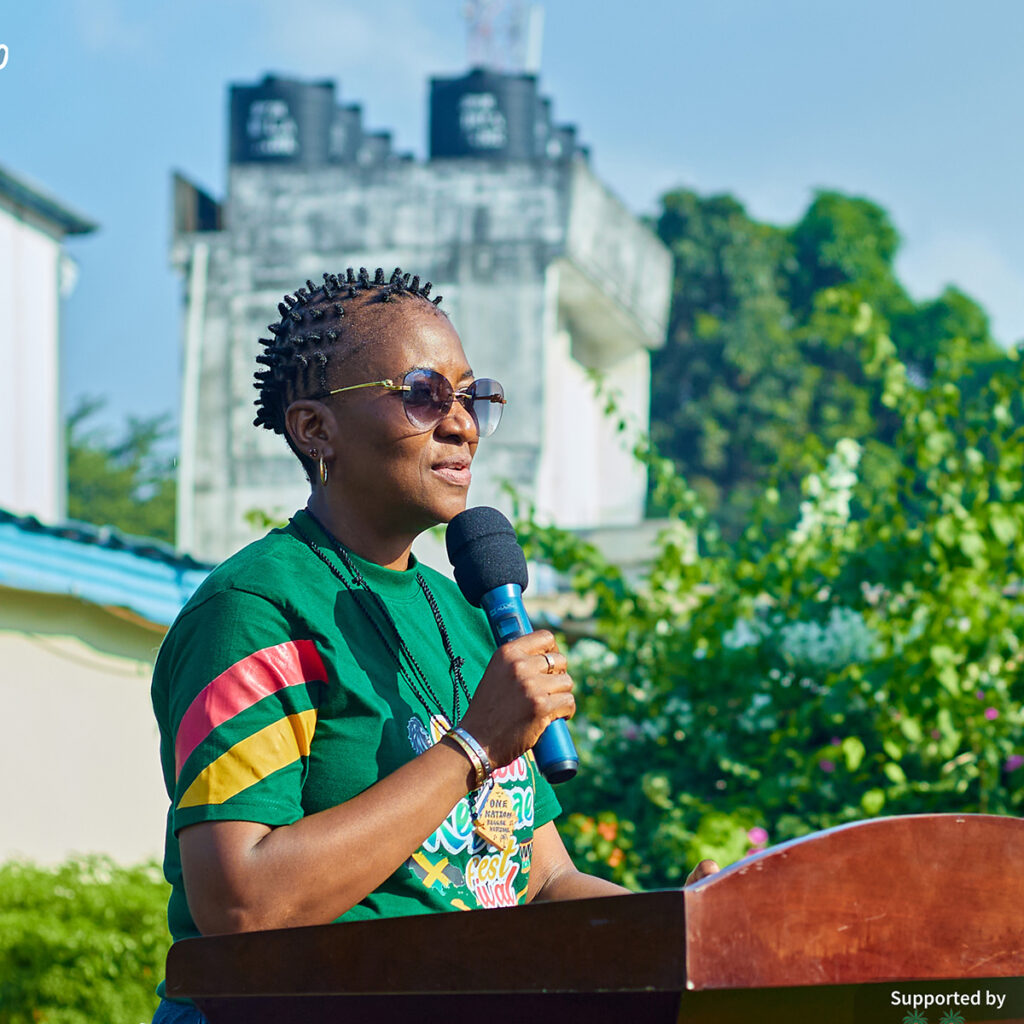
The One Nation Reggae Festival was conceived as a platform to celebrate Sierra Leone’s culture, resilience, and creative economy. While no major national event is without challenges, it is important that public discourse around the festival remains balanced, factual, and solution-oriented.
First, it must be clearly stated that the Ministry of Tourism and Cultural Affairs is not the statutory body responsible for municipal cleaning and waste management. That mandate lies with relevant environmental and local government institutions, including the Freetown City Council and agencies under the environmental sector. However, despite this limitation, the Ministry has consistently supported and facilitated clean-up exercises at tourism sites and cultural attractions, recognising that environmental cleanliness directly affects visitor experience and destination image.
To suggest that the Ministry has ignored sanitation concerns is therefore inaccurate. From beaches to heritage sites, targeted cleaning initiatives have been undertaken in collaboration with partners, volunteers, and local authorities, particularly around major tourism events.
On the issue of Sizzla Kalonji’s remarks, these should not be framed as an embarrassment to the nation. On the contrary, his message was a call for collective national responsibility, not an indictment of a single institution. Environmental cleanliness is a shared duty of government, communities, media, and citizens alike. There is nothing shameful about a respected international artist encouraging a country he admires to do better. In fact, his words helped spark youth-led clean-up efforts across Freetown, an outcome that deserves recognition, not defensiveness.
It is also important to highlight what has been largely overlooked: the international artistes were taken on a Freedom Tour of Freetown’s historic monuments and cultural landmarks. They visited key sites, learned about Sierra Leone’s history, and engaged with its people. Both Sizzla Kalonji and Christopher Martin expressed admiration for the country’s progress, resilience, and cultural depth, applauding how far Sierra Leone has come despite its past challenges. These moments contributed positively to the nation’s image and should not be erased from the narrative.
Regarding the unfortunate stage incident involving Christopher Martin, accountability must be accurately directed. The Ministry contracted Cribs International, a professional service provider, to deliver technical staging and production. As with any contracted service, the provider bears responsibility for execution and safety compliance. Cribs has since issued a public statement on the incident. While the occurrence was regrettable, it is misleading to suggest that it defined, or negated the success of the six-day cultural showcase, which featured multiple performances, exhibitions, and cultural engagements without incident.
No serious assessment of the festival can ignore its positives: international visibility, cultural exchange, youth engagement, and the reaffirmation of Sierra Leone’s place within the global reggae and cultural movement.
Finally, Sierra Eye rightly raises concerns about waste, but an equally important question must be asked: what practical actions has Sierra Eye itself taken to help address the waste challenge facing Freetown? Media houses play a powerful role not only in critique, but also in mobilising awareness, behavioural change, and community action. Advocacy must extend beyond commentary to contribution.
Sierra Leone’s waste problem is real. It predates this festival and will not be solved by assigning blame to one ministry or one event. It requires inter-ministerial collaboration, strong local governance, sustained citizen discipline, private-sector participation, and responsible media engagement.
The One Nation Reggae Festival was not a denial of our challenges,it was a reminder of our potential. Criticism has its place, but progress will only come when accountability is shared and solutions are pursued collectively.